
This article is meant for informational purposes only and should not be considered medical or dietary advice. Always consult a qualified healthcare provider, dietitian, or nutritionist before making significant changes to your diet, especially if you have underlying health conditions, allergies, or specific weight loss goals.
When it comes to weight loss, every calorie counts — and choosing the right milk can make a big difference. Many people are turning to unsweetened almond milk as a lighter alternative to dairy milk because it’s naturally low in calories, sugar-free, and rich in nutrients.
Unlike regular milk or flavored plant-based options, unsweetened almond milk provides a creamy texture with very few calories, making it ideal for smoothies, coffee, or recipes that support a calorie deficit. In this article, we’ll explore how unsweetened almond milk can fit into your weight loss plan, its nutritional profile, and the best ways to use it effectively.
What Is Unsweetened Almond Milk?
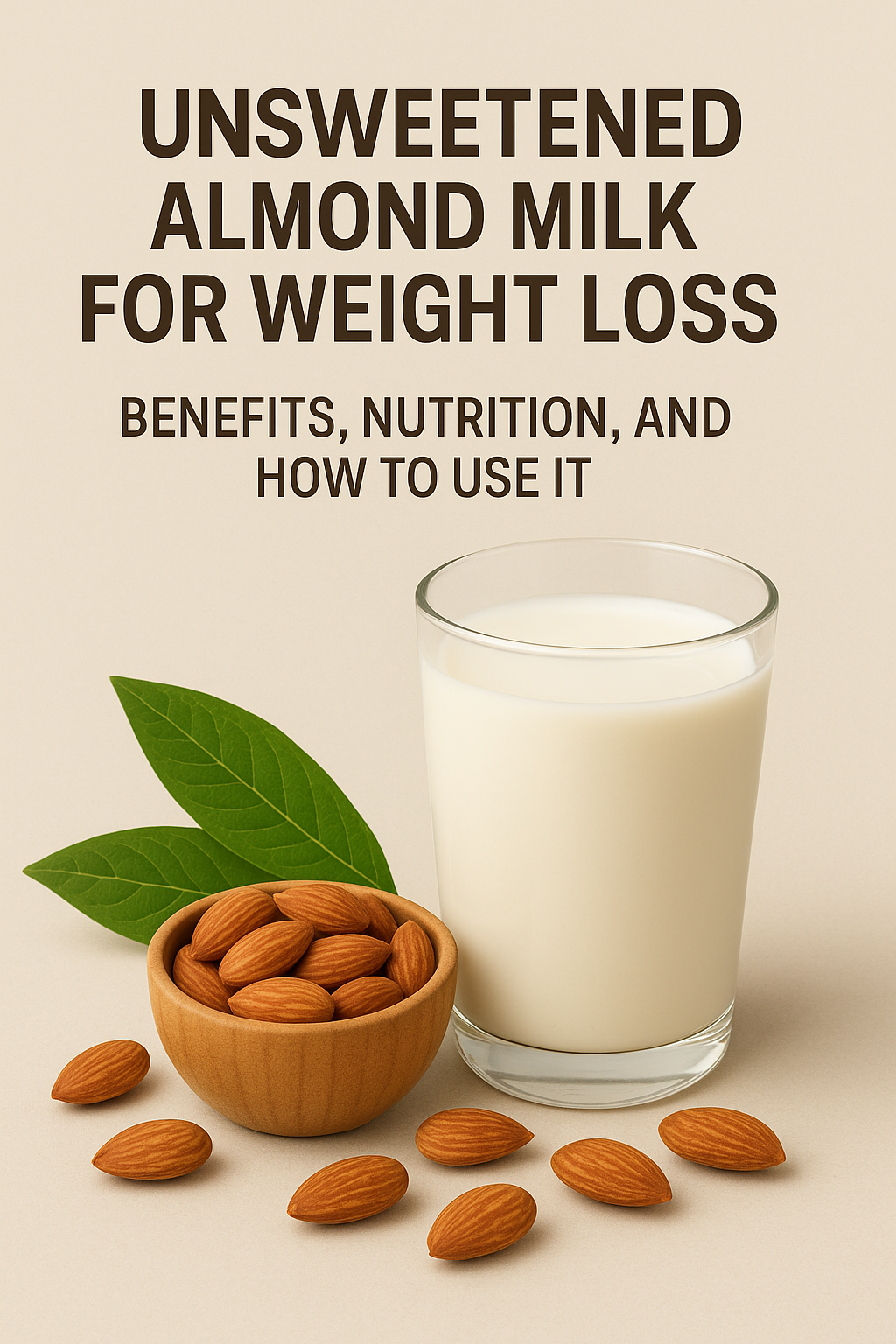
Unsweetened almond milk is a plant-based beverage made by blending almonds with water and straining out the pulp to create a smooth, light-textured drink. The “unsweetened” label means it has no added sugar, sweeteners, or flavorings, making it lower in calories than both dairy milk and sweetened almond milk.
A typical cup of unsweetened almond milk contains around 30 to 40 calories, compared to over 120 calories in whole milk. It’s naturally lactose-free, making it a great choice for those with lactose intolerance or anyone seeking a lighter alternative to dairy.
Besides being gentle on the stomach, it’s often fortified with calcium, vitamin D, and vitamin E, giving it added nutritional value without extra calories.
Nutritional Profile of Unsweetened Almond Milk
Unsweetened almond milk is one of the lowest-calorie milk alternatives available, but it still provides several important nutrients. Here’s a general overview of what you get in one cup (240 ml):
- Calories: 30–40
- Protein: 1 g
- Fat: 2.5–3 g
- Carbohydrates: 1–2 g
- Fiber: 1 g
- Calcium: 450 mg (fortified versions)
- Vitamin E: 40% of the daily value (DV)
- Vitamin D: 25% of the DV (fortified versions)
Compared to cow’s milk, almond milk has far fewer calories and carbs, though it’s lower in protein. However, its healthy fats and high vitamin E content make it a nutritious choice for those focused on calorie control and heart health.
How Unsweetened Almond Milk Supports Weight Loss
Unsweetened almond milk fits naturally into a calorie-conscious diet. Here’s how it can help you reach your weight loss goals:
a. Low in Calories
With only about 30–40 calories per cup, it’s one of the lightest milk alternatives available. You can use it in coffee, cereal, or smoothies without worrying about adding excess calories.
b. No Added Sugars
Since it’s unsweetened, it doesn’t cause blood sugar spikes or cravings that can lead to overeating—an advantage for people trying to manage both weight and energy levels.
c. Helps Control Hunger
Though it’s low in protein, the small amount of healthy fat and fiber can help you feel slightly fuller, especially when combined with other nutrient-rich foods.
d. Dairy-Free and Easy to Digest
It’s suitable for people with lactose intolerance or those who find dairy milk heavy or bloating. Better digestion can indirectly support weight control.
e. Versatile in Recipes
You can replace high-calorie milk or cream in recipes—like smoothies, oats, and coffee—with almond milk to reduce calorie intake without losing flavor or texture.
Best Ways to Use Unsweetened Almond Milk for Weight Loss
Unsweetened almond milk can easily become a staple in your daily routine. Here are some simple and effective ways to include it in your diet:
1. In Morning Smoothies
Blend it with fruits like berries, spinach, and a scoop of protein powder for a low-calorie, nutrient-dense breakfast. It adds creaminess without the calories of dairy milk or yogurt.
2. As a Coffee or Tea Base
Use unsweetened almond milk in your coffee or chai instead of full-fat milk. It gives a smooth texture while cutting down on both sugar and fat intake.
3. In Oatmeal or Overnight Oats
Prepare oats with almond milk instead of whole milk for a lighter, heart-healthy breakfast. You can add chia seeds, flaxseeds, or fruit for extra fiber.
4. For Baking and Cooking
Substitute almond milk in pancake batter, soups, or sauces that typically use regular milk or cream. It reduces calories while maintaining flavor.
5. In Post-Workout Shakes
Mix almond milk with protein powder and banana to make a refreshing recovery drink that’s lower in sugar and calories.
Common Mistakes to Avoid
While unsweetened almond milk is great for weight loss, certain habits can reduce its effectiveness. Here are a few mistakes to watch out for:
1. Choosing Sweetened or Flavored Versions
Many almond milk brands sell vanilla or chocolate-flavored versions that contain added sugar. Always check the label and stick to unsweetened varieties to keep your calorie count low.
2. Relying Only on Almond Milk for Nutrition
Almond milk is low in protein, so it shouldn’t replace protein-rich foods. Pair it with eggs, Greek yogurt, or plant-based protein powders to maintain muscle and metabolism.
3. Ignoring Fortified Nutrients
Not all almond milks are fortified. Pick ones with added calcium, vitamin D, and vitamin B12 to ensure you’re not missing essential nutrients found in dairy milk.
4. Overusing in Smoothies
Even though it’s low-calorie, adding too many calorie-dense ingredients like nut butter, honey, or full fruits can quickly turn a “diet smoothie” into a high-calorie drink.
5. Skipping Balanced Meals
Unsweetened almond milk can support weight loss, but only when it’s part of a balanced diet. Relying solely on it or skipping meals can slow metabolism and cause fatigue.
Who Should Consider Unsweetened Almond Milk
Unsweetened almond milk is suitable for a wide range of people, especially those mindful of calories or looking for a gentle alternative to dairy. Here’s who benefits most:
1. People Trying to Lose Weight
Its low calorie and zero sugar content make it perfect for maintaining a calorie deficit without giving up creamy textures in meals or drinks.
2. Individuals with Lactose Intolerance
Since almond milk is dairy-free, it’s an excellent substitute for those who experience bloating, gas, or discomfort from cow’s milk.
3. Vegans and Plant-Based Eaters
Unsweetened almond milk fits seamlessly into vegan diets, offering essential fortified nutrients like calcium and vitamin D.
4. Those Managing Blood Sugar Levels
Its low glycemic index helps avoid blood sugar spikes, making it a safer choice for people with prediabetes or diabetes.
5. Anyone Seeking a Lighter, Cleaner Beverage
For people reducing processed food and sugar, almond milk offers a simple, wholesome option that aligns with clean eating habits.
Alternatives and Comparisons
While unsweetened almond milk is a great option for weight loss, it’s not the only plant-based milk available. Here’s how it compares with other popular choices:
1. Unsweetened Almond Milk vs. Soy Milk
- Calories: Almond milk (30–40) is lower than soy milk (80–100).
- Protein: Soy milk has more protein (6–7 g per cup) compared to almond milk (1 g).
- Best for: People seeking a higher-protein option might prefer soy milk, while almond milk suits those focused on calorie control.
2. Unsweetened Almond Milk vs. Oat Milk
- Calories: Oat milk typically contains 90–120 calories per cup.
- Carbs: Oat milk is higher in carbs and natural sugars.
- Best for: Those who prefer a creamier texture but aren’t strictly cutting calories.
3. Unsweetened Almond Milk vs. Dairy Milk
- Calories: Whole milk (150 calories) vs. Almond milk (30–40 calories).
- Fat: Almond milk has healthier unsaturated fats.
- Best for: People who want to reduce saturated fat and total calorie intake.
In summary, almond milk offers the lowest calories among popular options, making it ideal for anyone aiming for weight loss without giving up taste or texture.
Sample 1-Day Meal Plan Using Unsweetened Almond Milk
Here’s a simple and practical way to include unsweetened almond milk in your daily diet while keeping calories in check:
Breakfast:
Green Smoothie – Blend 1 cup unsweetened almond milk with spinach, half a banana, chia seeds, and a scoop of protein powder.
Approx. 250 calories
Mid-Morning Snack:
Iced Coffee – Use unsweetened almond milk instead of cream. Add a sprinkle of cinnamon for flavor.
Approx. 40 calories
Lunch:
Grilled Chicken Salad – Prepare a light dressing using almond milk, olive oil, and lemon juice instead of mayonnaise-based dressings.
Approx. 400 calories
Evening Snack:
Overnight Oats – Made with unsweetened almond milk, rolled oats, and berries.
Approx. 200 calories
Dinner:
Vegetable Soup – Use unsweetened almond milk as a base for a creamy texture without added fat or cream.
Approx. 300 calories
Total Daily Calories: Around 1,200–1,300, depending on portion sizes — ideal for a light, nutrient-balanced weight loss plan.
Unsweetened almond milk is one of the most effective and effortless additions you can make to a weight loss diet. With only about 30–40 calories per cup and zero added sugars, it helps maintain a calorie deficit without sacrificing taste or texture.
It’s versatile enough to use in smoothies, coffee, cereals, or cooking, and it fits nearly every dietary preference — vegan, lactose-free, and low-carb. While it’s low in protein, pairing it with protein-rich foods ensures a balanced and sustainable approach to weight management.
In short, unsweetened almond milk can support your weight loss goals when used as part of a healthy, nutrient-dense, and active lifestyle.