
Disclaimer
Nutritional values are approximate and can vary by growing conditions and preparation methods. This article is for informational purposes only and not a substitute for professional medical or dietary advice.
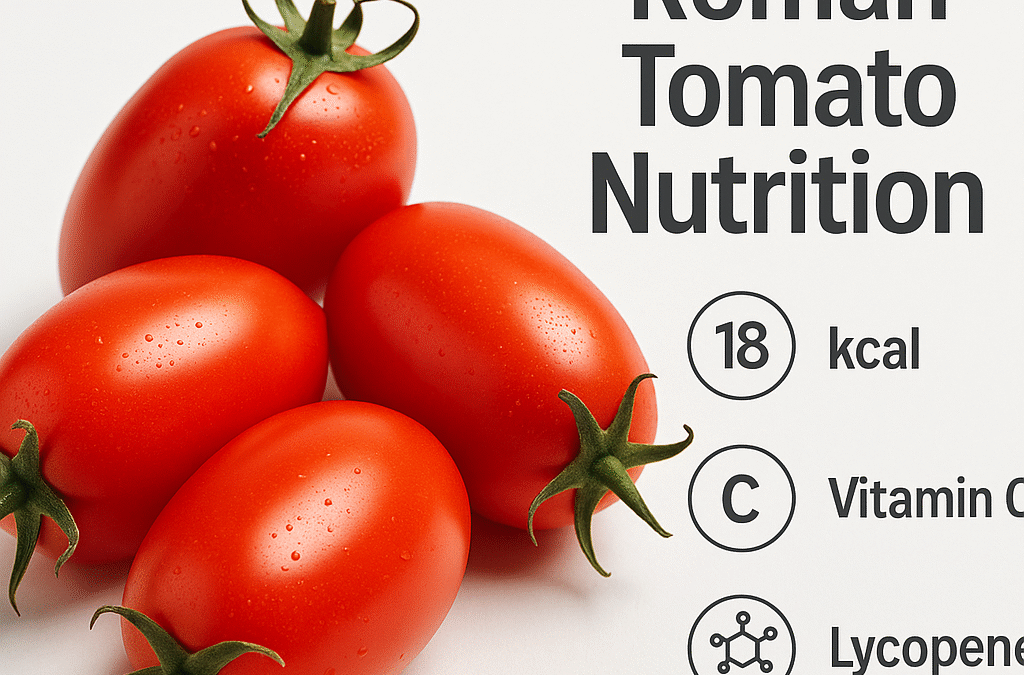
Firm, flavorful, and full of color, the Roman tomato — also known as the Roma tomato — is one of the most versatile and nutritious varieties of tomatoes used in cuisines around the world. Recognized for its oval shape and rich, meaty flesh, it’s a top choice for sauces, soups, and salads.
Understanding Roman tomato nutrition reveals why this small fruit packs such a powerful nutritional punch. From vitamins and antioxidants to low calories and high water content, Roman tomatoes offer remarkable health benefits that extend well beyond their taste.
What Is a Roman Tomato?
The Roman tomato (Roma tomato) is a type of plum tomato known for its dense texture and lower water content compared to cherry or beefsteak tomatoes. This makes it perfect for cooking, as it produces thick sauces without becoming watery.
Roman tomatoes are widely cultivated in Italy, the United States, and Mexico, and are commonly used in:
- Pasta sauces
- Salsas and stews
- Oven roasting
- Tomato paste and canning
Their nutrition profile and tangy-sweet taste make them both a culinary and health favorite.
Roman Tomato Nutrition Facts (Per 100 g / About 1 Medium Tomato)
| Nutrient | Amount |
|---|---|
| Calories | 18 kcal |
| Total Fat | 0.2 g |
| Saturated Fat | 0 g |
| Carbohydrates | 3.9 g |
| Sugars | 2.6 g |
| Dietary Fiber | 1.2 g |
| Protein | 0.9 g |
| Sodium | 5 mg |
| Potassium | 237 mg |
| Vitamin C | 20 mg (22% DV) |
| Vitamin A | 833 IU (17% DV) |
| Vitamin K | 7.9 µg (10% DV) |
| Folate | 13 µg |
| Calcium | 10 mg |
| Iron | 0.3 mg |
| Magnesium | 11 mg |
| Water Content | ~94% |
DV = Daily Value based on a 2,000-calorie diet.
Calories in Roman Tomatoes
A medium Roman tomato (about 60 grams) contains roughly 11 calories, making it an ultra-light and nutrient-dense food.
This low-calorie count, paired with high water and fiber content, makes Roman tomatoes ideal for:
- Weight management
- Hydration support
- Low-calorie meal planning
They’re an excellent way to add volume and nutrition to meals without increasing calories.
Carbohydrates and Sugar
Roman tomatoes provide about 3.9 grams of carbohydrates per 100 grams, with 2.6 grams of natural sugar.
These sugars are naturally occurring and balanced by fiber and antioxidants, resulting in a low glycemic index (GI ~15).
This means Roman tomatoes release energy slowly, supporting stable blood sugar levels — suitable even for people with diabetes when eaten in moderation.
Fiber Content
Each 100 grams of Roman tomatoes offers 1.2 grams of dietary fiber, primarily soluble fiber (pectin).
This supports:
- Healthy digestion
- Gut microbiome balance
- Improved cholesterol control
- Satiety between meals
Adding tomatoes to salads, soups, and sauces is an easy way to increase fiber intake naturally.
Protein and Fat
Roman tomatoes provide 0.9 grams of protein and only 0.2 grams of fat per 100 grams.
While not a protein source on their own, they complement protein-rich dishes beautifully. Their near-zero fat content makes them suitable for low-fat diets, while their nutrients enhance fat metabolism when combined with healthy oils like olive oil.
Vitamins in Roman Tomatoes
Roman tomatoes are rich in several key vitamins that contribute to overall health and disease prevention.
- Vitamin C:
With 20 mg per 100 g, Roman tomatoes provide about 22% of your daily needs.
It strengthens the immune system, aids collagen formation, and acts as a potent antioxidant. - Vitamin A (as Beta-Carotene):
Responsible for the tomato’s red pigment, beta-carotene converts into vitamin A, supporting eye health, skin repair, and cell growth. - Vitamin K:
Important for blood clotting and bone strength — 100 grams provides 10% of your daily value. - Folate (B9):
Supports DNA formation and cell division, essential during pregnancy and growth phases. - Small Amounts of B Vitamins (B1, B2, B3, B6):
Aid in energy metabolism and nervous system function.
Minerals in Roman Tomatoes
| Mineral | Function | Amount (Per 100 g) |
|---|---|---|
| Potassium | Regulates blood pressure and fluid balance | 237 mg |
| Calcium | Strengthens bones and teeth | 10 mg |
| Magnesium | Aids nerve and muscle function | 11 mg |
| Iron | Supports oxygen transport in blood | 0.3 mg |
| Phosphorus | Contributes to bone health and metabolism | 24 mg |
| Sodium | Very low, heart-friendly | 5 mg |
These minerals, particularly potassium, help maintain heart rhythm, muscle function, and hydration — making Roman tomatoes an excellent food for cardiovascular support.
Antioxidants and Phytonutrients
Roman tomatoes are renowned for their antioxidant content, which helps protect cells from oxidative damage.
Key compounds include:
- Lycopene
- The carotenoid responsible for the tomato’s deep red color.
- A powerful antioxidant linked to reduced risk of heart disease, prostate cancer, and inflammation.
- Cooking enhances lycopene absorption — sauces and pastes are even richer in it.
- Beta-Carotene
- A precursor to Vitamin A, supporting immune health and skin renewal.
- Naringenin and Chlorogenic Acid
- Bioactive compounds that reduce oxidative stress and inflammation.
- Vitamin C and E Synergy
- Work together to protect skin, blood vessels, and cells from damage caused by free radicals.
Water Content and Hydration
With a water content of about 94%, Roman tomatoes are highly hydrating and refreshing.
They help:
- Maintain electrolyte balance
- Support kidney function
- Prevent dehydration in hot climates
Adding Roman tomatoes to your diet contributes both fluids and essential electrolytes like potassium.
Heart Health Benefits
Roman tomatoes are rich in lycopene, potassium, and fiber, which collectively support heart health.
These nutrients:
- Reduce LDL (“bad”) cholesterol
- Help lower blood pressure
- Improve vascular flexibility
- Protect arteries from oxidative stress
Studies suggest that regular tomato intake may lower the risk of cardiovascular diseases by up to 25%.
Skin and Eye Health
The combination of Vitamin A, Vitamin C, and lycopene promotes healthy skin and sharp vision.
These nutrients:
- Protect skin from UV-induced damage
- Support collagen formation
- Prevent night blindness and age-related macular degeneration
Consuming Roman tomatoes with a small amount of healthy fat (like olive oil or avocado) enhances absorption of carotenoids and Vitamin A.
Digestive Health and Gut Support
Roman tomatoes provide soluble fiber and natural acids that help balance the gut microbiome.
They support digestion by:
- Stimulating stomach acid for proper breakdown of food
- Feeding beneficial gut bacteria
- Preventing constipation
Their fiber and hydration combination makes them one of the best foods for digestive wellness.
Weight Management
With only 18 calories per 100 grams, Roman tomatoes add bulk and flavor without adding calories.
Their fiber and water content help create fullness, reducing overall calorie consumption.
They are also low in fat and sugar, making them an excellent food for weight loss or maintenance diets.
Roman Tomatoes vs Other Tomato Varieties
| Variety | Calories (100 g) | Water | Vitamin C | Lycopene | Best Use |
|---|---|---|---|---|---|
| Roman (Roma) | 18 kcal | 94% | 20 mg | High | Sauces, roasting |
| Cherry | 30 kcal | 92% | 18 mg | Moderate | Salads, snacks |
| Beefsteak | 22 kcal | 95% | 25 mg | Moderate | Sandwiches |
| Heirloom | 25 kcal | 94% | 20 mg | High | Fresh salads |
Roman tomatoes are especially rich in lycopene and Vitamin C, making them ideal for cooking and nutrient retention.
Cooking and Nutritional Impact
Cooking Roman tomatoes can increase lycopene bioavailability by 2–3 times.
Best cooking methods include:
- Roasting or simmering with olive oil (enhances absorption)
- Blanching or stewing for sauces and soups
- Grilling for rich, smoky flavor
Avoid overcooking to preserve Vitamin C and delicate antioxidants.
Health Benefits Summary
- Rich in Antioxidants: Lycopene and Vitamin C protect against oxidative stress.
- Heart-Friendly: Potassium and fiber support cardiovascular health.
- Good for Skin and Eyes: Vitamin A and carotenoids enhance tissue health.
- Supports Digestion: Fiber and acids promote a balanced gut.
- Low-Calorie and Hydrating: Perfect for weight management and hydration.
Potential Drawbacks
- Acidity:
Tomatoes are naturally acidic; excess intake may irritate those with acid reflux or gastritis. - Allergic Reactions:
Rare, but some individuals may experience sensitivity to tomato compounds. - Pesticide Residue:
Tomatoes are often treated with pesticides — wash thoroughly or buy organic to minimize exposure. - Cooking Loss of Vitamin C:
Prolonged heat reduces Vitamin C by about 30–40%, though lycopene becomes more potent.
Quick Recap of Roman Tomato Nutrition
| Nutrient | Value (Per 100 g) |
|---|---|
| Calories | 18 kcal |
| Carbohydrates | 3.9 g |
| Fiber | 1.2 g |
| Sugars | 2.6 g |
| Protein | 0.9 g |
| Fat | 0.2 g |
| Potassium | 237 mg |
| Vitamin C | 20 mg |
| Vitamin A | 833 IU |
| Water Content | 94% |
The Bottom Line
Roman tomatoes are more than just a cooking ingredient — they’re a nutrient-rich, low-calorie food that delivers powerful health benefits.
With high levels of lycopene, Vitamin C, potassium, and fiber, they support heart health, digestion, skin vitality, and overall well-being.
Whether eaten raw in salads or cooked into a sauce, Roman tomatoes prove that simple, whole foods can make a meaningful impact on long-term health.
Colorful, versatile, and wholesome — they’re a perfect example of nutrition meeting flavor.