
Disclaimer
This article is intended for informational purposes only and should not replace medical advice from your healthcare provider. Always follow the instructions provided by your doctor, nurse, or pharmacist regarding Semaglutide dosage, injection sites, and technique.
Do not attempt to adjust your dose, change your injection site, or substitute products without consulting a licensed healthcare professional. If you experience persistent pain, swelling, or unusual side effects after injection, seek medical attention immediately.
Semaglutide should be used only under medical supervision as part of a comprehensive weight management plan that includes proper nutrition, physical activity, and regular monitoring.
Semaglutide has quickly become one of the most effective and widely prescribed medications for weight loss, used under brand names. It works by mimicking the effects of a natural hormone in your body—GLP-1 (glucagon-like peptide-1)—which helps regulate appetite, control blood sugar, and slow digestion.
But while understanding how Semaglutide works is important, how and where you inject it matters just as much. The injection site can affect both comfort and absorption, influencing how smoothly the medication works week after week.
This article explains the best places to inject Semaglutide for weight loss, how to choose the right site for you, and the proper technique for safe, effective administration. Whether you’re new to Semaglutide or looking to refine your injection routine, this guide will help ensure every dose is delivered correctly and comfortably.
Understanding How Semaglutide Works for Weight Loss
Semaglutide belongs to a class of medications known as GLP-1 receptor agonists, which mimic a hormone naturally produced in your body called glucagon-like peptide-1. This hormone plays a crucial role in regulating blood sugar, appetite, and digestion — all key factors in weight management.
When injected, Semaglutide helps with weight loss in three primary ways:
- Suppresses appetite: It slows down how quickly food leaves your stomach, helping you feel fuller for longer and reducing overall calorie intake.
- Improves insulin function: It enhances the body’s ability to use insulin effectively, helping control blood sugar levels and reducing cravings triggered by glucose fluctuations.
- Promotes fat metabolism: Over time, it encourages the body to use stored fat for energy by stabilizing blood sugar and reducing overeating.
Because Semaglutide is a subcutaneous (under the skin) injection, its absorption rate can vary depending on where it’s administered. Choosing the right injection site ensures that the medication enters the bloodstream consistently, leading to steady results, fewer side effects, and more predictable weight loss outcomes.
Types of Semaglutide Injections
Semaglutide for weight loss is delivered as a subcutaneous injection, meaning it’s injected just beneath the skin into the fatty tissue layer — not into muscle or vein. This route allows the medication to be absorbed slowly and steadily, maintaining consistent levels in the body throughout the week.
Weekly Dosing
Semaglutide is designed to be injected once a week, on the same day each week, at any time of the day — with or without food. Maintaining a consistent schedule helps keep the medication’s effect stable and reduces the risk of missed doses or fluctuating appetite control.
Pen vs. Vial Administration
Most patients receive Semaglutide in a pre-filled injection pen, which is simple and user-friendly. Some medical providers may prescribe vial and syringe versions, especially for compounded formulations. Both are equally effective, but pens are preferred for home use because they:
- Deliver a precise dose with minimal preparation.
- Reduce injection errors.
- Are easier to handle, especially for beginners.
Subcutaneous Injection Sites
The key to successful Semaglutide treatment is selecting a soft, fatty area of the body for injection. The three recommended areas are:
- Abdomen (stomach area)
- Thighs (front or outer region)
- Upper arms (back of the arm)
Each of these areas allows for even medication absorption and minimal discomfort when injected properly. The next section explains which site offers the best results — and how to choose the right one for you.
The Best Injection Sites for Semaglutide
Selecting the right injection site can make a significant difference in both comfort and absorption. Semaglutide should always be injected into the subcutaneous fat layer, not into muscle. The three most common and approved sites — the abdomen, thigh, and upper arm — are all effective, but each has its own advantages.
1. Abdomen (Stomach Area)
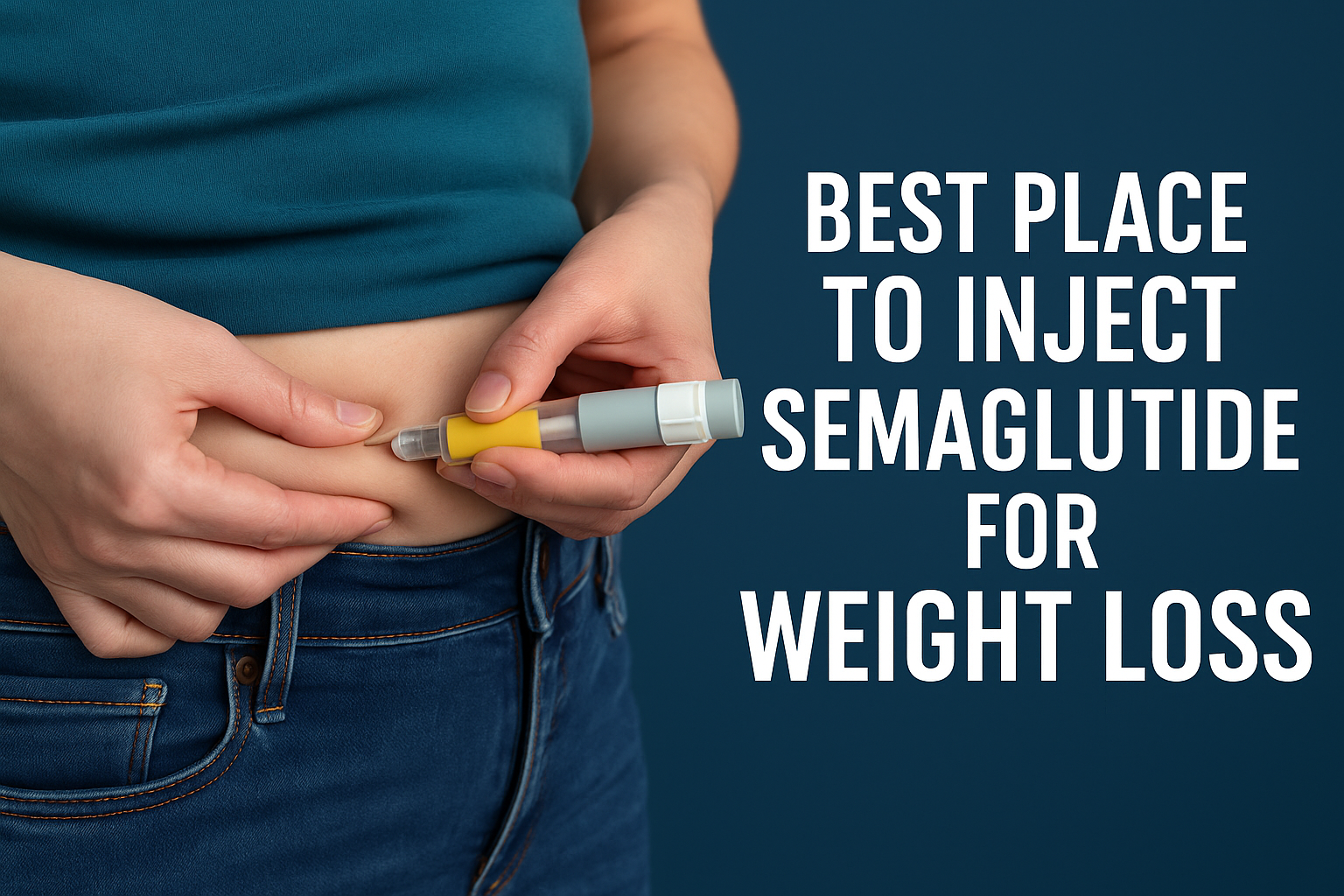
The abdomen is considered the best and most commonly recommended site for Semaglutide injections.
- Inject into the soft fatty tissue around the belly, at least 2 inches away from your belly button.
- Avoid scars, moles, or areas that are bruised or firm.
- You can inject anywhere from just below the ribs to above the hips, as long as it’s the fatty layer and not muscle.
Why it’s preferred:
- Offers the most consistent absorption rate due to uniform fat distribution.
- Easy to reach for self-injection.
- Less painful than other sites when injected correctly.
Pro tip: Rotate injection spots within your abdomen weekly (for example, left side one week, right side the next) to avoid irritation or tissue buildup known as lipohypertrophy.
2. Thighs (Front or Outer Area)
The front or outer thigh is the second most common site.
- Choose the middle third of the thigh — between the hip and the knee.
- Stay away from inner thigh muscles and bony areas.
Why it’s effective:
- Provides a thick layer of fat in most adults.
- A good option if the abdominal area feels sore or overused.
- Allows for easy rotation when alternating with abdominal injections.
Note: Some users report slightly slower absorption compared to the abdomen, but it still remains a safe and reliable location.
3. Upper Arm (Back of the Arm)
The upper arm, specifically the back of the tricep area, is also approved for subcutaneous Semaglutide injections.
- The injection should go into the soft fatty tissue — not into the muscle.
- This site often requires help from another person because reaching the correct area on your own can be difficult.
Advantages:
- Useful as a rotation site if abdomen or thigh areas are irritated.
- Can offer consistent absorption when injected properly.
Best for: Individuals who have assistance or are experienced with injections and confident with technique.
All three injection sites are medically approved and effective. However, most healthcare professionals recommend the abdomen for its combination of accessibility, consistent absorption, and minimal discomfort. The key is to inject into the same general area weekly but rotate exact spots to maintain healthy skin and optimal drug absorption.
Choosing the Best Site for You
While all approved sites — abdomen, thigh, and upper arm — allow Semaglutide to work effectively, choosing the best one often depends on your comfort, accessibility, and personal preference. What matters most is not the site itself, but consistency and proper injection technique.
Factors to Consider When Selecting Your Injection Site
1. Comfort and Ease of Access
- The abdomen is usually the easiest to reach, even for beginners, making it ideal for self-injection.
- The thigh is another convenient option for those who prefer a seated position while injecting.
- The upper arm may require assistance, so it’s better suited for individuals with a helper or for clinical settings.
2. Absorption Rate Differences
Although all three areas provide steady absorption, minor variations exist:
- Abdomen: Fastest and most consistent absorption.
- Thigh: Moderate absorption rate, slightly slower than the abdomen.
- Upper arm: Similar to the thigh but may vary slightly depending on fat distribution.
3. Rotation to Prevent Skin Issues
Injecting repeatedly in the same exact spot can cause skin irritation, bruising, or lumps under the skin (lipohypertrophy). To avoid this:
- Rotate injection sites weekly within the same region (e.g., alternate left and right sides of the abdomen).
- Avoid injecting into scar tissue, moles, or areas that feel hard or tender.
4. Fat Distribution and Body Type
People with more subcutaneous fat may find injections more comfortable in the abdomen or thigh, while those with leaner builds might prefer areas with softer tissue for less pain.
5. Lifestyle and Routine
Consider your routine — for instance:
- If you wear tight clothing around the waist, injecting into the thigh may be more comfortable.
- If you’re active in sports or fitness, choose an area you won’t strain or bump during exercise.
Summary: Quick Comparison
| Injection Site | Comfort | Absorption Speed | Best For |
|---|---|---|---|
| Abdomen | High | Fastest and most consistent | Most users, beginners |
| Thigh | Moderate | Slightly slower | Easy self-injection alternative |
| Upper Arm | Moderate | Variable | Assisted injections or advanced users |
Ultimately, the best place to inject Semaglutide is the one that fits seamlessly into your lifestyle and allows you to maintain a consistent weekly routine. For most users, the abdomen remains the top choice due to its reliability and ease of use.
Proper Technique for Injecting Semaglutide
Step-by-Step Injection Guide
Injecting Semaglutide correctly ensures safe delivery, minimal discomfort, and optimal absorption. Follow these steps carefully each week:
- Wash your hands thoroughly.
Use soap and water before handling your injection supplies to prevent infection. - Prepare your injection site.
Clean the chosen area (abdomen, thigh, or upper arm) with an alcohol swab and let it air dry. This prevents bacteria from entering the skin. - Prepare your pen.
- Remove the cap from your Semaglutide pen.
- Check that the liquid inside is clear and colorless — never use cloudy or discolored medication.
- Attach a new needle for every injection to avoid contamination or dullness.
- Pinch the skin gently.
Using your thumb and index finger, pinch a fold of skin (about 2–3 cm) to ensure you’re injecting into the fatty layer rather than muscle. - Insert the needle at a 90-degree angle.
- For most people, a 90° angle ensures proper subcutaneous delivery.
- If you’re very thin, a 45° angle may be more comfortable — ask your healthcare provider for personalized advice.
- Press and hold the injection button.
Inject the medication slowly and steadily. Once the dose is complete, keep the needle in place for 5–10 seconds to ensure full delivery. - Remove the needle and dispose of it safely.
Place used needles in a FDA-approved sharps container (never in household trash). - Do not massage the site.
Simply apply light pressure with a clean cotton pad if needed. Massaging may cause irritation or uneven absorption.
Tips for Comfort and Safety
- Let the pen reach room temperature before injecting — cold medication can sting.
- Rotate injection spots each week within the same region to prevent skin thickening or bruising.
- Inject on the same day each week, preferably at the same time, to maintain consistent Semaglutide levels.
- Avoid injecting into damaged skin, scars, or areas with visible veins.
- Take your time — rushing injections can increase pain or cause leakage.
After the Injection
- You may experience mild redness or tenderness at the injection site — this is normal and should fade within a few hours.
- Do not skip or double doses. If you miss a dose and it’s been less than 5 days, take it as soon as possible. If it’s been more than 5 days, skip it and take your next dose on schedule.
- Store the pen correctly (refrigerated when unused, room temperature after first use).
Injecting Semaglutide the right way ensures you get the full benefit of your treatment, helping regulate appetite, improve metabolic balance, and promote steady weight loss without unnecessary discomfort.
Common Mistakes to Avoid
Injecting Too Close to the Belly Button
Always inject at least 2 inches away from the navel. Injecting too close can cause discomfort, bruising, and uneven absorption since the tissue near the belly button is denser and less fatty.
Injecting Into Muscle Instead of Fat
Semaglutide must be injected into subcutaneous fat, not muscle. Injecting too deep can lead to faster absorption, which may increase side effects or reduce the drug’s long-term efficacy. Pinching the skin before inserting the needle helps ensure proper placement.
Reusing Needles
Never reuse needles — they become dull after a single use, which increases pain and risk of infection. Always attach a new, sterile needle for each injection and dispose of it safely afterward.
Skipping Site Rotation
Consistently injecting in the same spot can cause skin irritation, scarring, or lumps (lipohypertrophy). Rotate injection locations each week — for example, switch between the left and right sides of your abdomen or alternate between abdomen and thigh.
Injecting Cold Medication
Injecting Semaglutide directly from the refrigerator can cause stinging or discomfort. Let the pen sit at room temperature for 15–30 minutes before use.
Not Cleaning the Skin
Skipping the alcohol swab step increases the risk of introducing bacteria into the skin. Always clean the injection site and let it dry before injecting.
Forgetting to Hold the Pen After Injection
Releasing the button too soon can cause part of the dose to leak out. After pressing the injection button, keep the pen pressed firmly against your skin for 5–10 seconds to ensure the full dose is delivered.
Inconsistent Timing or Missed Doses
Semaglutide works best when injected on the same day each week. Skipping doses or varying the schedule may cause blood levels to fluctuate, reducing effectiveness. Set reminders or alarms to help maintain consistency.
Avoiding these mistakes ensures each injection is safe, effective, and comfortable, helping you get the most out of your Semaglutide treatment for weight loss.
When to Contact Your Healthcare Provider
While mild discomfort or slight redness at the injection site is common, certain symptoms require medical attention. Contact your healthcare provider if you experience:
Persistent Injection Site Reactions
- Redness, swelling, or pain that lasts more than 48 hours.
- Hard lumps or thickened skin where you inject.
- Signs of infection, such as warmth, discharge, or spreading redness.
Unusual or Severe Side Effects
- Nausea, vomiting, or abdominal pain that doesn’t subside with time.
- Severe fatigue, dizziness, or dehydration.
- Allergic reactions, including rash, itching, or shortness of breath.
- Symptoms of low blood sugar, like shakiness, sweating, or confusion (especially if used alongside diabetes medication).
Questions About Site Rotation or Technique
If you’re unsure about where or how to inject, ask your doctor or pharmacist for a demonstration. Many clinics and pharmacies provide nurse-led injection training to ensure safe administration.
Changing Injection Sites or Dosages
Before switching injection areas frequently or adjusting your dose, always consult your healthcare provider. They can guide you on how to make these changes safely without affecting absorption or results.
Signs of More Serious Complications
Rare but important side effects that require immediate attention include:
- Severe abdominal pain (possible pancreatitis)
- Yellowing of the eyes or skin (liver-related concerns)
- Difficulty swallowing or neck swelling (thyroid-related issues)
If you experience any of these symptoms, stop using Semaglutide and seek medical care immediately.
Your healthcare provider is your best resource for guidance, ensuring that every injection is safe, effective, and tailored to your health needs.
Safety and Storage Tips
Proper storage and handling of Semaglutide are essential for maintaining its effectiveness and preventing contamination. Since it’s a temperature-sensitive medication, following the manufacturer’s instructions closely ensures each dose remains safe and potent.
Storage Guidelines
- Before first use: Keep Semaglutide pens refrigerated at a temperature between 36°F and 46°F (2°C to 8°C). Do not freeze.
- After first use: You may store the pen at room temperature (below 86°F or 30°C) or continue refrigerating it.
- Avoid direct heat or sunlight: Exposure to extreme temperatures can reduce the medication’s strength.
- Keep the pen capped: Always replace the cap after use to protect the needle area and prevent contamination.
- Do not use expired medication: Check the expiration date printed on the label before each injection.
Handling and Hygiene
- Use a new needle for every injection to reduce infection risk and ensure smooth delivery.
- Never share pens or needles with anyone, even if the needle has been changed — this can spread infections.
- Do not shake the pen: Vigorous movement can damage the medication’s molecular structure.
- Wipe the rubber seal with an alcohol swab before attaching a new needle.
Disposal of Needles and Pens
- Place used needles immediately into a FDA-approved sharps container.
- When the container is three-quarters full, follow local guidelines for safe disposal — most pharmacies or hospitals offer collection programs.
- Never throw needles or pens directly into the household trash.
Traveling with Semaglutide
- If traveling, carry your medication in a cool, insulated bag with a small ice pack to maintain temperature.
- Keep it in your carry-on bag, not checked luggage, to avoid temperature extremes.
- Bring extra needles and a copy of your prescription in case of emergencies.
Keeping Track of Doses
- Use a calendar, phone reminder, or weekly alarm to stay consistent with your injection schedule.
- If you use multiple pens (for different doses), label them clearly to avoid confusion.
By storing and handling Semaglutide correctly, you protect its potency and ensure that every injection delivers the intended therapeutic effect — supporting safe, consistent progress in your weight loss journey.
Final Thoughts
Learning the best place to inject Semaglutide for weight loss is an essential part of ensuring the medication works safely and effectively. While Semaglutide helps regulate appetite and blood sugar, its true success depends on consistent dosing, correct injection technique, and choosing the right site.
For most people, the abdomen is the top choice because it offers the most consistent absorption and is easy to reach for self-injection. However, the thigh and upper arm are equally valid options — what matters most is rotating sites weekly and maintaining a regular injection routine.
Proper injection technique also helps minimize side effects like redness or irritation while ensuring the full dose is absorbed. Remember to store your medication correctly, follow your healthcare provider’s dosing instructions, and never hesitate to ask for guidance if you’re unsure about anything related to your injections.
When used correctly, Semaglutide can be a powerful ally in achieving steady, medically supervised weight loss. Combined with healthy eating, regular activity, and medical follow-up, consistent and careful injection practices make every dose count toward a healthier, more balanced life.