
Disclaimer
This article is for informational purposes only and does not constitute medical or nutritional advice. Always consult a healthcare professional or registered dietitian before making significant dietary changes, especially if you have heart disease, hypertension, or metabolic conditions.
Few foods divide opinion like bacon. To some, it’s the ultimate breakfast indulgence — crisp, smoky, and irresistible. To others, it’s a processed meat best kept to a minimum. But beyond the taste debate lies a nutritional question worth exploring: What exactly is in bacon?
Understanding bacon’s nutrition facts helps you make informed choices about how (and how often) it fits into your diet. This article breaks down bacon’s calories, fats, proteins, vitamins, minerals, and potential health considerations — along with how different types and cooking methods change its nutritional profile.
What Is Bacon?
Bacon is cured meat, traditionally made from pork belly or back cuts. The curing process involves salting, smoking, or adding nitrates to preserve the meat and intensify flavor. While pork remains the classic source, turkey bacon and plant-based bacon alternatives have grown popular among people seeking lighter or non-pork options.
The curing and smoking process not only give bacon its distinct flavor but also impact its nutrition — especially sodium levels and the presence of certain compounds like nitrites and nitrates.
Basic Bacon Nutrition Facts (Per 100 Grams)
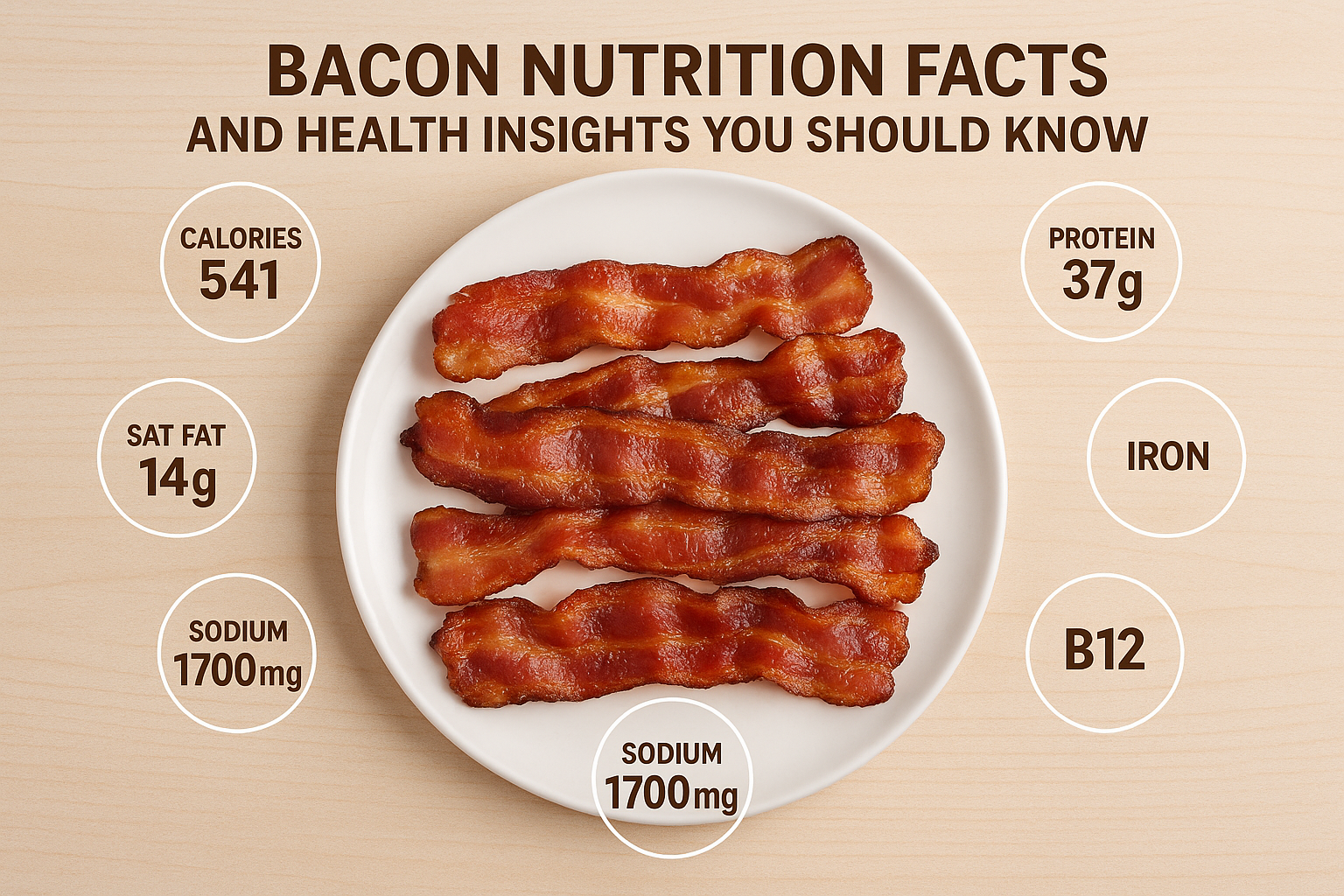
Let’s start with the numbers. On average, 100 grams of cooked, pan-fried bacon contains:
| Nutrient | Amount |
|---|---|
| Calories | 540 kcal |
| Protein | 37 g |
| Total Fat | 42 g |
| Saturated Fat | 14 g |
| Monounsaturated Fat | 19 g |
| Polyunsaturated Fat | 4 g |
| Cholesterol | 110 mg |
| Sodium | 1,700 mg |
| Potassium | 565 mg |
| Carbohydrates | 1.4 g |
| Sugars | 0 g |
| Fiber | 0 g |
| Iron | 1.8 mg |
| Zinc | 3.0 mg |
| Vitamin B1 (Thiamine) | 0.5 mg |
| Vitamin B12 | 1.4 µg |
| Selenium | 55 µg |
These values can vary slightly depending on the brand, cut (belly vs. back), curing process, and whether it’s pan-fried or baked.
Calories in Bacon
Bacon is calorie-dense because it’s high in fat. A single slice (around 8 grams) has roughly 43 calories, most of which come from fat. Two to three slices — a typical serving — provide about 130 to 150 calories.
The calorie content increases when bacon is fried in oil or cooked until crisp, as it loses water but retains fat. Baking or microwaving bacon may slightly reduce calorie density due to fat drippings being removed.
Protein in Bacon
Bacon provides complete protein, meaning it contains all nine essential amino acids. Each slice offers around 3 to 4 grams of protein, depending on size and thickness.
For comparison:
- 3 slices (24 g) → about 10–12 g protein
- 100 g cooked bacon → about 37 g protein
This makes bacon a moderate source of protein but not the healthiest one, given its high fat and sodium levels.
Fat Content and Types
The majority of bacon’s calories come from fat — both saturated and unsaturated.
- Saturated fat: Around 14 g per 100 g. While long blamed for heart disease, newer research suggests moderate saturated fat from unprocessed sources may not be as harmful. Still, bacon remains a processed meat, so moderation is key.
- Monounsaturated fat: Roughly 19 g per 100 g. This is the same heart-healthy fat found in olive oil.
- Polyunsaturated fat: About 4 g per 100 g. Includes omega-3 and omega-6 fatty acids.
Because of this fat blend, bacon is energy-dense and contributes to satiety — but frequent consumption can increase total dietary fat and calorie intake.
Sodium and Nitrates
Bacon’s sodium content is high, often exceeding 300–400 mg per slice. That’s about 15–20% of the daily recommended limit (2,300 mg).
The salt is essential for curing, but it’s also the reason excessive bacon intake may raise blood pressure and contribute to cardiovascular risk.
Additionally, bacon often contains nitrates and nitrites — preservatives that enhance color and prevent bacterial growth. While safe within regulated limits, these compounds can form nitrosamines when exposed to high heat, which are potentially carcinogenic.
Tip: Look for nitrate-free or uncured bacon options if you want to reduce these compounds.
Vitamins in Bacon
Despite being labeled as “unhealthy,” bacon offers a surprising range of micronutrients, particularly B-vitamins:
- Vitamin B1 (Thiamine): Important for energy metabolism.
- Vitamin B3 (Niacin): Helps with digestion and nervous system function.
- Vitamin B6 and B12: Support brain function and red blood cell formation.
- Vitamin D (small amounts): Found naturally in pork fat.
Because bacon is calorie-dense, even small portions contribute modestly to daily vitamin intake — but they shouldn’t replace leaner, nutrient-rich protein sources like chicken or fish.
Minerals in Bacon
Bacon provides several key minerals:
- Zinc: Supports immune function and testosterone production.
- Iron: Helps transport oxygen in the blood.
- Phosphorus: Crucial for bone health.
- Selenium: An antioxidant that supports thyroid function.
- Potassium: Balances sodium’s effect on blood pressure (though bacon’s sodium far outweighs this benefit).
Cholesterol and Bacon
Bacon contains dietary cholesterol, about 30–35 mg per slice, or around 110 mg per 100 g. While once seen as harmful, current research shows dietary cholesterol has less impact on blood cholesterol than previously thought. However, individuals with high LDL levels or heart conditions should still limit intake.
Bacon and Heart Health
The link between bacon and heart disease primarily relates to:
- Sodium: Raises blood pressure in salt-sensitive individuals.
- Saturated fats: May raise LDL (“bad”) cholesterol.
- Nitrates and nitrites: Potential long-term health risks.
Eating bacon occasionally as part of a balanced diet rich in fruits, vegetables, and whole grains is generally safe for most healthy individuals. Problems arise with frequent or large-portion consumption.
Turkey Bacon vs. Pork Bacon
Turkey bacon is marketed as a “healthier” alternative — but how do the two compare nutritionally?
| Nutrient (Per 100 g) | Pork Bacon | Turkey Bacon |
|---|---|---|
| Calories | 540 kcal | 380 kcal |
| Protein | 37 g | 29 g |
| Total Fat | 42 g | 28 g |
| Saturated Fat | 14 g | 8 g |
| Sodium | 1,700 mg | 1,900 mg |
While turkey bacon has fewer calories and less fat, it often contains more sodium and additives to enhance flavor. It’s a reasonable substitute if you want less fat, but not necessarily a “clean” option.
Plant-Based Bacon Alternatives
Plant-based bacon (often made from soy, tempeh, coconut, or mushroom) offers a cruelty-free, lower-fat option.
Typical nutritional profile (per 2 slices):
- Calories: 60–90
- Protein: 5–7 g
- Fat: 2–4 g
- Sodium: 200–400 mg
While these options lack the exact texture of pork bacon, they provide protein with lower saturated fat and no cholesterol. However, some brands still use high sodium or artificial flavorings — always check the label.
Cooking Methods and Nutrition Changes
How you cook bacon can significantly alter its nutritional composition.
1. Pan-Frying:
Traditional but retains more fat unless drained. Crispier bacon has less water but proportionally higher fat by weight.
2. Baking:
Lets fat drip away, reducing calorie density slightly. Produces evenly cooked strips with less oil splatter.
3. Microwaving:
Surprisingly efficient — absorbs fat into paper towels, lowering fat and calorie content by up to 20%.
4. Air-Frying:
Uses hot air circulation to render fat with minimal oil. Comparable to baking in calorie savings.
Tip: Drain or blot bacon on paper towels to remove excess grease and reduce overall fat intake per serving.
Is Bacon Keto-Friendly?
Yes, bacon fits well into ketogenic and low-carb diets due to its high fat and low carbohydrate content.
However, people on keto should still prioritize nutrient diversity — relying heavily on bacon can lead to excessive sodium and insufficient micronutrients.
Balanced keto plates might pair a few bacon slices with eggs, avocado, or leafy greens for added fiber and vitamins.
Potential Health Concerns
While bacon is tasty, it comes with notable caveats:
1. Processed Meat Classification:
The World Health Organization (WHO) classifies processed meats like bacon as Group 1 carcinogens, linked to colorectal cancer risk with high, long-term intake.
2. Sodium Sensitivity:
Excess sodium increases risk of hypertension and fluid retention.
3. Weight Gain:
High calorie density makes overeating easy, especially when combined with other fatty foods.
4. Preservatives and Nitrosamines:
These can form during high-heat frying and may damage cells over time.
5. Allergies or Intolerance:
Some individuals react to curing agents or smoke flavorings.
Eating bacon occasionally is unlikely to cause harm, but frequent consumption as a daily breakfast choice is not advisable.
Healthier Ways to Enjoy Bacon
You don’t have to give up bacon entirely — just be smart about how you consume it.
1. Choose Leaner Cuts:
Look for center-cut or back bacon with less visible fat.
2. Cook Smart:
Bake or microwave instead of frying; drain off grease.
3. Pair Wisely:
Serve with vegetables, eggs, or whole grains rather than refined carbs.
4. Control Portions:
Limit to 2–3 slices per serving, once or twice a week.
5. Go Nitrate-Free:
Opt for “uncured” or nitrate-free brands that use natural salts or celery powder.
6. Try Substitutes:
Experiment with turkey bacon, tempeh bacon, or even mushroom strips for a smoky crunch without excess fat.
Bacon in a Balanced Diet
Moderation is the key. Bacon can be part of a balanced eating pattern if you:
- Maintain a diet rich in whole foods — fruits, vegetables, lean proteins, and whole grains.
- Manage portion sizes and frequency.
- Avoid combining bacon with other processed or fried foods regularly.
Think of bacon as a flavor enhancer, not a staple protein source.
Fun Facts About Bacon
- The word “bacon” comes from the Old High German bacho, meaning “buttock” or “ham.”
- In ancient Rome, soldiers carried salted pork belly as rations.
- Americans eat over 18 pounds of bacon per person per year.
- Bacon fat, once discarded, is now used by chefs as a cooking oil substitute for flavor.
The Bottom Line
Bacon delivers a punch of flavor, protein, and certain nutrients — but also carries high levels of fat, sodium, and preservatives. It’s neither a superfood nor a villain.
Enjoying bacon occasionally, in small portions and cooked mindfully, is a reasonable choice for most healthy adults. Pair it with fiber-rich foods, stay hydrated, and balance your diet with whole, nutrient-dense options throughout the week.
Ultimately, the smartest way to eat bacon is not to quit it entirely, but to understand it — and use that knowledge to eat consciously.