
This article is for informational purposes only and should not be considered medical advice. Blood thinners and all other prescription medications must only be taken under the supervision of a qualified healthcare provider. If you are experiencing erectile dysfunction or have concerns about circulation or heart health, consult a licensed physician or urologist or related expert in the medical field for proper diagnosis and treatment. Never start, stop, or adjust any medication without professional guidance.
When an erection becomes difficult to achieve or maintain, the cause often traces back to how blood flows through the body. Since blood circulation plays a central role in sexual function, it’s common to assume that medications improving circulation — such as blood thinners — might help with erectile dysfunction.
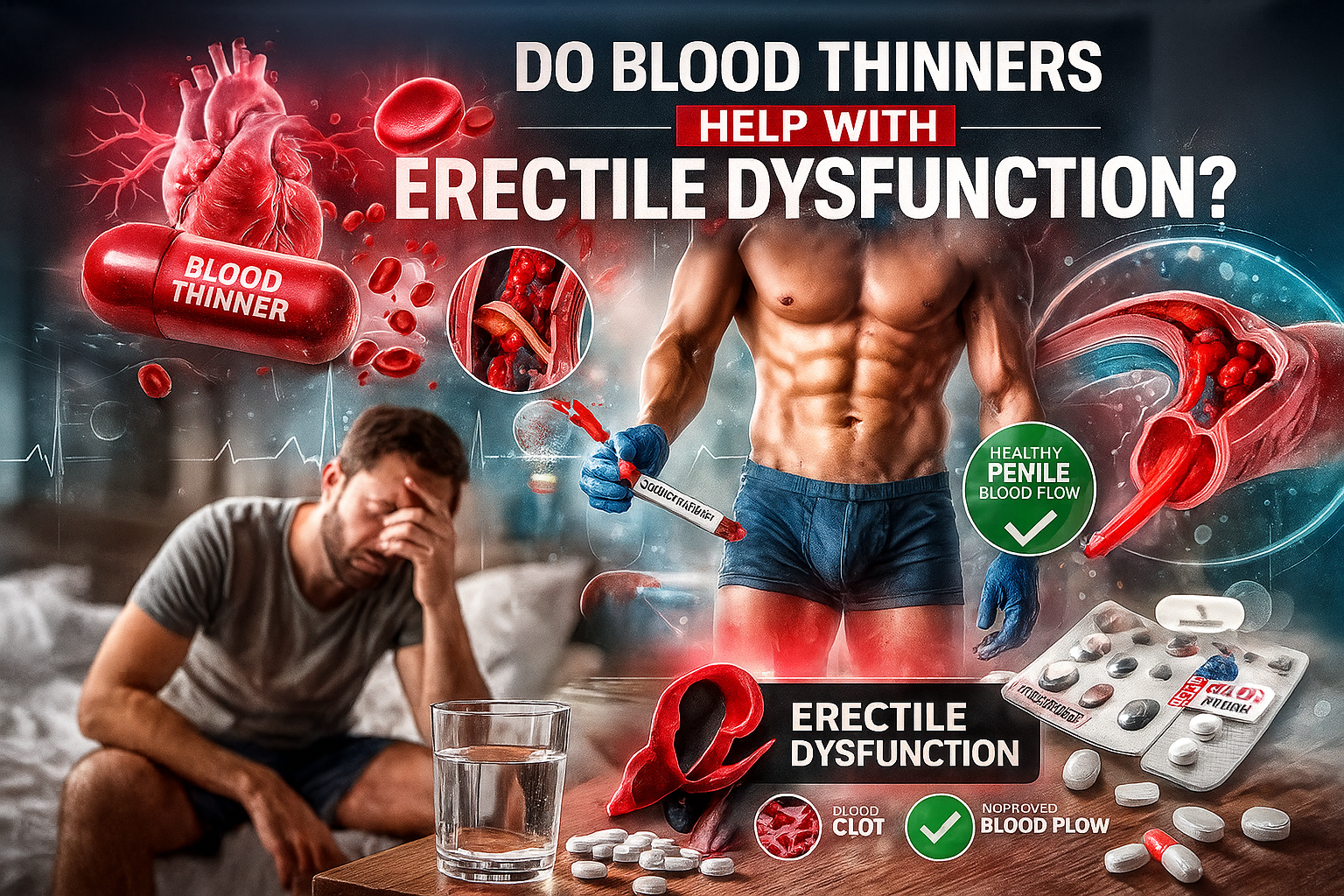
But that assumption isn’t entirely accurate. Blood thinners don’t increase blood flow in the way most people think; they simply prevent clots from forming or getting bigger. While this can reduce the risk of heart attacks and strokes, it doesn’t necessarily resolve the vascular issues behind erectile dysfunction.
This article breaks down how blood thinners work, their relationship with erectile function, and whether they have any real role in improving sexual health.
Understanding Erectile Dysfunction
Erectile dysfunction isn’t just about performance — it’s a medical condition rooted in how the body manages blood flow, nerve function, and hormonal balance. To understand whether blood thinners might help, it’s essential first to grasp how erections actually work and what causes them to fail.
How an Erection Happens
When arousal begins, the brain sends signals through the spinal cord to the nerves in the penis. These nerves release nitric oxide (NO), a chemical messenger that relaxes the smooth muscles of penile arteries. This relaxation widens the arteries, allowing blood to rush into the corpora cavernosa — two sponge-like chambers that fill and expand. The veins that normally drain blood from the penis constrict, trapping the blood and sustaining the erection.
This entire process depends on a healthy cardiovascular system. If arteries are stiff or blocked, the penis won’t receive enough blood pressure to achieve a firm erection. Similarly, if the nerves are damaged — as often happens in diabetes — the signaling pathway that triggers the process may be interrupted.
Common Causes of Erectile Dysfunction
Although ED can result from multiple factors, they generally fall into three main categories:
- Vascular causes – Conditions that restrict blood flow, such as atherosclerosis (hardening of the arteries), hypertension, and high cholesterol.
- Neurological causes – Nerve damage due to diabetes, spinal injuries, or pelvic surgery.
- Hormonal and psychological factors – Low testosterone, depression, anxiety, or chronic stress, which can all affect sexual desire and performance.
Lifestyle habits often worsen these problems. Smoking narrows blood vessels; obesity increases vascular strain; and sedentary behavior lowers nitric oxide availability — all making erections harder to achieve.
ED as a Marker of Overall Health
Doctors often call erectile dysfunction the body’s “early warning sign.” Because penile arteries are smaller than coronary arteries, blockages there tend to appear first. Men who experience persistent ED may actually be facing early cardiovascular disease without realizing it. That’s why medical professionals usually investigate heart and metabolic health when diagnosing ED — it’s not just a symptom, it’s a signal.
What Are Blood Thinners?
The term blood thinner is a bit misleading. These medications don’t literally make the blood thinner or lighter — instead, they change how blood clots form. Their main goal is to prevent dangerous clots that could block circulation in vital organs such as the heart, lungs, or brain.
How Blood Thinners Work
Normally, when you get a cut or internal injury, your body activates platelets and clotting proteins to stop the bleeding. This process is essential, but sometimes the body forms clots unnecessarily — for instance, inside arteries or veins already narrowed by plaque buildup. These clots can travel through the bloodstream and cause life-threatening events like heart attacks, pulmonary embolisms, or strokes.
Blood thinners help by interrupting this clotting process in two primary ways:
- Anticoagulants: These drugs interfere with the proteins in your blood that are responsible for forming clots. Examples include:
- Warfarin (Coumadin)
- Heparin
- Apixaban (Eliquis)
- Rivaroxaban (Xarelto)
- Dabigatran (Pradaxa)
- Antiplatelet agents: These prevent platelets — small cell fragments in your blood — from clumping together. The most common examples include:
- Aspirin
- Clopidogrel (Plavix)
- Ticagrelor (Brilinta)
Both types reduce the risk of clot formation but in slightly different ways.
Who Uses Blood Thinners?
Doctors typically prescribe blood thinners for people at risk of clot-related conditions, such as:
- Atrial fibrillation (irregular heartbeat)
- Deep vein thrombosis (DVT)
- Pulmonary embolism (PE)
- Mechanical heart valves
- A history of stroke or heart attack
These medications can save lives by maintaining smoother blood circulation through critical arteries and veins.
Why They’re Confused with ‘Improving Blood Flow’
Because blood thinners keep blood from clotting, many assume they also increase blood flow or make circulation more efficient. In reality, they don’t widen arteries or increase pressure; they simply reduce the stickiness of the blood. The arteries still depend on their own flexibility and health to deliver enough blood to the organs — including the penis.
This distinction becomes important when exploring whether blood thinners can genuinely help with erectile dysfunction.
The Connection Between Blood Flow and Erections
Blood flow is at the very core of erectile function. To achieve and maintain an erection, the penis must receive an adequate and sustained supply of blood — and that process depends entirely on healthy blood vessels and proper vascular signaling.
How Blood Flow Affects an Erection
An erection begins when sexual stimulation triggers the release of nitric oxide (NO) from nerve endings and endothelial cells (the inner lining of blood vessels). Nitric oxide relaxes the smooth muscles within the penile arteries, causing them to dilate. This dilation allows blood to rush into the two chambers known as the corpora cavernosa.
As these chambers fill, the expanding tissue compresses nearby veins to trap the blood inside, maintaining firmness. Once arousal fades, the nitric oxide level drops, smooth muscles contract again, and the trapped blood flows out — ending the erection.
When blood flow is restricted or nitric oxide signaling is disrupted, this delicate process fails. Even if desire and nerve function remain intact, insufficient circulation prevents enough blood from filling the penis, leading to weak or short-lived erections.
Vascular Health and Erectile Function
Erectile dysfunction and cardiovascular disease often go hand in hand. In fact, the same conditions that damage arteries elsewhere in the body — such as high blood pressure, diabetes, obesity, and smoking — also harm the small penile arteries first.
- Atherosclerosis: The buildup of fatty plaques narrows arteries, reducing oxygen and nutrient delivery.
- Endothelial dysfunction: Damaged artery linings produce less nitric oxide, limiting blood vessel dilation.
- Hypertension: Chronic high blood pressure stiffens arteries, impairing their ability to expand when needed.
Because penile arteries are only about 1–2 millimeters wide (compared to 3–4 mm in coronary arteries), even minor blockages can make a noticeable difference in erectile quality. This is why many doctors see ED as one of the earliest signs of vascular disease.
Why Good Circulation Alone Isn’t Always Enough
While improving blood flow is critical, it’s not the sole factor. Nerve health, hormone balance, and mental wellbeing all contribute to erectile strength. That’s why simply taking a medication that affects circulation — like a blood thinner — doesn’t automatically translate to better erections. The body’s vascular system must also be responsive, elastic, and capable of producing nitric oxide effectively.
Do Blood Thinners Actually Help with Erectile Dysfunction?
The idea that blood thinners could help with erectile dysfunction sounds logical at first. If erections depend on healthy blood flow, and blood thinners improve circulation, they might seem like a potential solution. But in reality, it’s not that simple — and the medical evidence doesn’t support using blood thinners as a treatment for ED.
How Blood Thinners Work in Context
Blood thinners prevent the formation or growth of blood clots — they don’t increase blood flow or open blocked arteries. The flow rate of blood through vessels depends more on the elasticity and width of those arteries, not the “thickness” or viscosity of the blood itself.
In erectile dysfunction, the most common problem isn’t clotting but atherosclerosis — the gradual buildup of fatty deposits that harden and narrow the arteries. This makes it harder for blood to reach the penis. Since blood thinners don’t dissolve plaque or repair damaged vessel walls, they can’t reverse this underlying cause.
What the Research Says
Studies examining the relationship between anticoagulants and erectile function have been limited and inconclusive. Some small studies have suggested that improving general cardiovascular health can lead to better erections, but that’s due to improved vascular function overall — not from taking blood thinners directly.
In fact, in certain cases, blood thinners might cause problems. For instance:
- Increased bruising and bleeding risk: Sexual activity or penile injections (in men who use therapies like Trimix) can lead to bruising or internal bleeding while on anticoagulants.
- Interactions with other medications: PDE5 inhibitors such as Viagra or Cialis can interact with blood thinners, requiring medical supervision to ensure safe dosing.
Most doctors agree that unless a patient has a specific blood-clot-related issue restricting penile blood flow (a very rare condition), there’s no therapeutic benefit in using blood thinners for erectile dysfunction.
Possible Exceptions
In extremely rare cases, a man’s ED may result from a venous thrombosis (a blood clot within a vein that drains the penis) or from vascular damage following trauma or surgery. In such situations, a specialist may consider anticoagulant therapy under strict supervision. However, this is far from typical and doesn’t apply to the vast majority of men with ED.
The Takeaway
Blood thinners aren’t a treatment for erectile dysfunction. While they protect against clots and improve cardiovascular safety in patients with heart or vascular disease, they don’t address the core mechanisms behind ED — poor arterial function, nerve health, or hormonal imbalance.
Risks of Using Blood Thinners Without Prescription
Because blood thinners are often associated with “better circulation,” some people assume they can self-medicate to improve blood flow — including for erectile problems. This assumption is not only incorrect but can be dangerous. Blood thinners are powerful medications that must be carefully monitored, as even small dosage errors can cause serious complications.
1. Internal and External Bleeding
The most significant risk of unsupervised blood thinner use is bleeding. These medications slow the clotting process, so even minor cuts or injuries can lead to prolonged bleeding. Internally, this can result in:
- Gastrointestinal bleeding (in the stomach or intestines)
- Nosebleeds and gum bleeding
- Bruising easily without reason
- Dangerous intracranial hemorrhage (bleeding inside the brain)
When taken without medical oversight, these risks multiply because there’s no monitoring of clotting parameters like INR (International Normalized Ratio), which doctors use to keep blood thinning levels safe.
2. Interaction with Other Medications
Blood thinners can interact with several common drugs, including:
- Painkillers (NSAIDs) such as ibuprofen or naproxen, which increase bleeding risk.
- Antibiotics and antifungal medications, which can alter how the body metabolizes anticoagulants.
- Herbal supplements like ginkgo biloba, garlic, or turmeric, which naturally have mild blood-thinning properties and can further amplify bleeding tendencies.
When combined unknowingly, these interactions can create severe side effects — sometimes requiring emergency care.
3. No Proven Benefit for Erectile Function
Taking blood thinners without medical necessity won’t improve erections or vascular performance. These drugs don’t dilate blood vessels or restore arterial elasticity; they simply prevent clot formation. Using them with the hope of improving erectile function is not only ineffective but exposes the body to unnecessary medical risk.
4. Complications During Medical or Dental Procedures
Patients on blood thinners must inform their doctors before undergoing any surgery, dental extraction, or invasive procedure. Without proper management, excessive bleeding can occur during or after the operation — a potentially life-threatening situation.
5. Psychological Impact of Misuse
Many men who self-medicate for erectile issues face added anxiety when results don’t improve. This can worsen the psychological component of ED, creating a cycle of stress and disappointment that deepens the problem instead of solving it.
Self-prescribing blood thinners is never a substitute for professional medical evaluation. ED may be frustrating, but it’s almost always a symptom of an underlying issue that can be treated safely with proper diagnosis and guidance.
Safer and Proven Treatments for Erectile Dysfunction
If blood thinners aren’t the answer, what actually helps? The good news is that erectile dysfunction is one of the most treatable sexual health conditions — provided the root cause is correctly identified. From prescription medications to lifestyle changes, several proven approaches can restore function safely and effectively.
1. Prescription Medications (PDE5 Inhibitors)
The first-line medical treatment for most men with ED includes phosphodiesterase type 5 (PDE5) inhibitors. These drugs work by enhancing nitric oxide activity, relaxing blood vessels in the penis, and allowing more blood to flow during arousal.
Commonly prescribed options include:
- Sildenafil (Viagra) – short-acting, ideal for planned intercourse.
- Tadalafil (Cialis) – long-acting (up to 36 hours), suitable for more flexibility.
- Vardenafil (Levitra) and Avanafil (Stendra) – alternatives with similar mechanisms.
They don’t increase sexual desire but make it easier to achieve and sustain an erection once aroused. When prescribed properly, these drugs are safe and effective for most men, including those with mild cardiovascular disease — but they must be avoided by anyone taking nitrate medications for chest pain.
2. Lifestyle Modifications
Because ED often stems from vascular and metabolic problems, improving overall health directly supports erectile function.
- Exercise regularly: Aerobic activity improves circulation and nitric oxide production.
- Quit smoking: Nicotine constricts blood vessels and accelerates arterial damage.
- Maintain a healthy weight: Obesity reduces testosterone and worsens vascular strain.
- Eat heart-healthy foods: Diets rich in fruits, vegetables, whole grains, and omega-3s improve endothelial function.
- Limit alcohol: Excessive drinking dulls nerve response and lowers testosterone levels.
Small lifestyle adjustments can significantly improve erectile quality, especially in men with mild or early-stage ED.
3. Psychological and Relationship Therapy
Mental health often plays an underrated role in erectile function. Anxiety, depression, or relationship stress can interfere with arousal and performance.
- Cognitive-behavioral therapy (CBT) can help address anxiety-driven ED.
- Sex therapy or couples counseling can rebuild intimacy and reduce pressure during sexual activity.
Combining psychological therapy with medical treatment often leads to better long-term results.
4. Hormonal Evaluation and Treatment
If low testosterone (hypogonadism) is suspected, a simple blood test can confirm it. When levels are low, doctors may recommend testosterone replacement therapy (TRT) in gel, patch, or injection form.
This therapy improves libido, energy, and sometimes erectile function, though it’s not suitable for all patients and should only be prescribed after a complete hormonal evaluation.
5. Other Medical Interventions
For men who don’t respond to pills or prefer non-oral options, doctors may recommend:
- Vacuum erection devices (VEDs): Mechanical pumps that draw blood into the penis.
- Penile injections (e.g., Trimix): Directly relax smooth muscles to trigger an erection.
- Low-intensity shockwave therapy: Stimulates new blood vessel growth in penile tissue.
- Penile implants: A surgical option for severe, treatment-resistant ED.
These treatments are reserved for specific cases but demonstrate how many effective solutions exist beyond self-medicating with blood thinners.
When to See a Doctor
Occasional erection difficulties are common and usually nothing to worry about. But if the problem becomes frequent or persistent, it’s important to consult a healthcare professional rather than experiment with over-the-counter supplements or medications like blood thinners.
Recognizing When It’s Time for Medical Help
- Persistent erectile difficulties: If the inability to get or maintain an erection lasts for several weeks or months.
- Reduced sexual desire: A sign that hormonal changes may be involved.
- Morning erections disappearing: Often indicates a physical rather than psychological cause.
- Pain, curvature, or physical changes in the penis: Could point to underlying structural issues such as Peyronie’s disease.
- Erectile issues along with fatigue, chest pain, or shortness of breath: These could indicate early cardiovascular disease and need urgent evaluation.
What to Expect During an Appointment
A doctor will begin with a detailed medical and sexual history, followed by a physical exam. You may be asked about medications, lifestyle habits, stress, and sleep patterns. Blood tests can check for:
- Blood sugar and cholesterol levels
- Testosterone and other hormone levels
- Signs of heart or kidney problems
If vascular problems are suspected, a Doppler ultrasound may be used to assess penile blood flow. In some cases, a referral to a cardiologist, endocrinologist, or urologist might follow to ensure a comprehensive approach.
Why Medical Evaluation Matters
Erectile dysfunction isn’t just about sexual performance; it’s often a signal that something deeper is going on — particularly with the heart and blood vessels. Identifying and treating the root cause early not only improves sexual health but may also prevent future cardiovascular events like heart attacks or strokes.
Taking the step to seek medical advice can feel uncomfortable, but it’s often the turning point toward both better health and restored confidence.
Final Verdict
Blood thinners are vital for people who need them — but they are not a solution for erectile dysfunction. Their role is to prevent clots, not to increase blood flow or reverse vascular damage. While it’s true that healthy circulation is key to achieving and maintaining an erection, the kind of circulation improvement needed in ED comes from widening arteries and improving endothelial health — not thinning the blood.
Erectile dysfunction usually develops from a combination of factors such as atherosclerosis, diabetes, obesity, nerve damage, and low hormone levels. Blood thinners do not address any of these underlying issues. Using them without medical guidance exposes a person to serious risks, including internal bleeding and dangerous drug interactions.
Men concerned about ED should approach the condition as a signal — a reason to check overall vascular and hormonal health rather than to self-prescribe any medication. The most effective way forward is through proper medical evaluation, evidence-based treatment, and lifestyle changes that support long-term sexual and cardiovascular wellbeing.
Treating the cause, not the symptom, is the real key to restoring confidence, function, and quality of life.