
Disclaimer
Nutritional values are approximate and vary by preparation, brand, and cooking method. This article is for informational purposes only and not a substitute for medical or dietary advice.
Lean, versatile, and packed with high-quality protein, chicken breast is one of the most widely consumed sources of lean meat across the world. Whether grilled, baked, or boiled, it’s a staple for athletes, dieters, and anyone looking to maintain muscle while keeping calories in check.
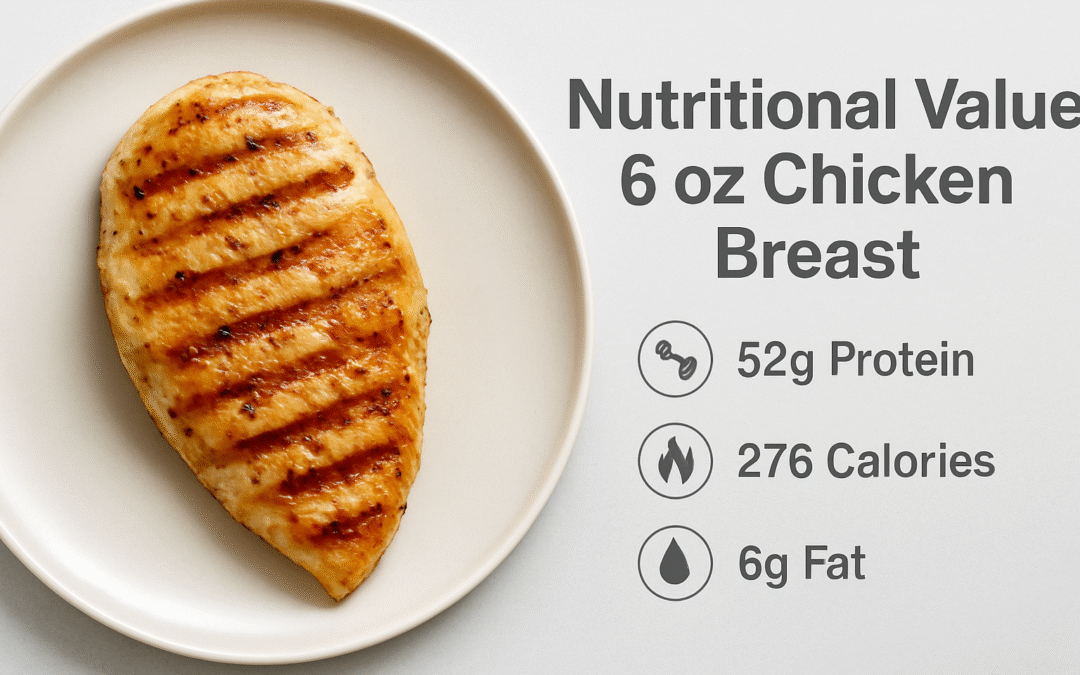
Understanding the nutritional value of a 6 oz chicken breast helps you make smarter dietary decisions — balancing protein intake with fat, vitamins, and minerals. In this article, we’ll explore its exact nutrition facts, benefits, and how it compares to other protein sources.
What Is a Chicken Breast?
The chicken breast is the lean white meat portion taken from the chest of the chicken. It’s composed mostly of muscle fibers with minimal fat, which is why it’s often recommended for high-protein, low-fat diets.
It can be cooked in many ways — grilled, baked, sautéed, or boiled — and each preparation slightly alters its calorie and nutrient profile. Skinless and boneless chicken breast is considered the leanest cut, preferred in health-conscious meal plans.
Nutritional Value of 6 oz Chicken Breast (Cooked, Skinless, Boneless)
| Nutrient | Amount |
|---|---|
| Calories | 276 kcal |
| Total Fat | 6 g |
| Saturated Fat | 1.7 g |
| Cholesterol | 138 mg |
| Sodium | 127 mg |
| Total Carbohydrates | 0 g |
| Sugars | 0 g |
| Dietary Fiber | 0 g |
| Protein | 52 g |
| Potassium | 660 mg |
| Iron | 1 mg |
| Calcium | 13 mg |
| Magnesium | 48 mg |
| Phosphorus | 460 mg |
| Zinc | 1.5 mg |
| Vitamin B3 (Niacin) | 22 mg (138% DV) |
| Vitamin B6 | 0.9 mg (70% DV) |
| Vitamin B12 | 0.5 µg (20% DV) |
DV = Daily Value based on a 2,000-calorie diet.
Calories in 6 oz Chicken Breast
A 6-ounce cooked, skinless chicken breast provides approximately 276 calories.
Of these calories:
- 75–80% come from protein
- 20–25% come from fat
- Virtually none from carbohydrates
This makes chicken breast an excellent lean protein source, ideal for those managing calorie intake without compromising on nutrition.
Protein Content
With 52 grams of protein per 6-ounce serving, chicken breast ranks among the highest natural protein sources available.
Protein plays a vital role in:
- Building and repairing muscle tissue
- Supporting immune and enzyme functions
- Reducing appetite through satiety
Its amino acid composition makes it a complete protein, meaning it contains all nine essential amino acids required by the human body.
For athletes and bodybuilders, one serving covers nearly the entire daily protein requirement for muscle maintenance or growth, depending on body weight.
Fat Content
A 6-ounce chicken breast has 6 grams of total fat, with only 1.7 grams of saturated fat.
The rest comes from heart-healthy unsaturated fats, which support hormone regulation and nutrient absorption.
Compared to darker cuts of chicken (like thighs or wings), the breast is significantly lower in fat:
- Thigh (6 oz): 13–15 g fat
- Wings (6 oz): 18–20 g fat
Removing the skin before cooking reduces the fat content by nearly 50%.
Carbohydrates
Chicken breast contains zero carbohydrates, making it ideal for low-carb or ketogenic diets.
This makes it a preferred protein source for individuals aiming to manage blood sugar or reduce carb intake while preserving lean muscle mass.
Vitamins in Chicken Breast
Chicken breast provides several essential B vitamins, especially niacin (B3) and pyridoxine (B6), which are crucial for energy metabolism.
| Vitamin | Function | Amount (6 oz) |
|---|---|---|
| Vitamin B3 (Niacin) | Converts food into energy, supports skin and brain | 22 mg |
| Vitamin B6 (Pyridoxine) | Protein metabolism, immune support | 0.9 mg |
| Vitamin B12 (Cobalamin) | Nerve function, red blood cell production | 0.5 µg |
| Choline | Brain health, metabolism | 80 mg |
| Pantothenic Acid (B5) | Hormone and enzyme synthesis | 1 mg |
These vitamins make chicken breast a nutrient-dense option for sustaining daily energy and nervous system health.
Minerals in Chicken Breast
Chicken breast offers a wide range of essential minerals that support muscular, cardiovascular, and metabolic health.
| Mineral | Function | Amount (6 oz) |
|---|---|---|
| Potassium | Regulates blood pressure and hydration | 660 mg |
| Phosphorus | Strengthens bones and teeth | 460 mg |
| Magnesium | Muscle relaxation, nerve function | 48 mg |
| Zinc | Boosts immunity and wound healing | 1.5 mg |
| Iron | Transports oxygen in blood | 1 mg |
| Calcium | Bone and muscle strength | 13 mg |
Together, these minerals make chicken breast a key part of a well-rounded diet for energy, recovery, and metabolic balance.
Sodium and Cholesterol
A 6 oz chicken breast naturally contains 127 mg of sodium, making it low in salt — ideal for those monitoring sodium intake.
Cholesterol content sits around 138 mg, which is moderate. Studies show that dietary cholesterol from lean poultry has minimal impact on blood cholesterol levels when consumed as part of a balanced diet.
Chicken Breast and Weight Management
Lean protein like chicken breast helps control weight by:
- Increasing satiety hormones that reduce appetite
- Promoting muscle mass retention during calorie restriction
- Boosting metabolic rate through thermogenesis
Replacing processed meats or refined carbs with lean chicken protein can lead to more sustainable weight loss and improved body composition.
Muscle Growth and Athletic Performance
Because of its high protein-to-calorie ratio, chicken breast is a foundational food in most muscle-building and athletic diets.
Consuming chicken after workouts supports:
- Muscle recovery and repair through amino acid replenishment
- Reduced muscle soreness
- Improved endurance by maintaining lean body mass
Pairing it with complex carbohydrates (like brown rice or quinoa) and healthy fats ensures optimal post-workout nutrition.
Cooking Methods and Their Nutritional Impact
| Cooking Method | Calories (6 oz) | Fat | Protein | Notes |
|---|---|---|---|---|
| Grilled (Skinless) | 276 | 6 g | 52 g | Retains nutrients, minimal fat |
| Baked | 280 | 6.5 g | 51 g | Slightly higher fat from natural juices |
| Boiled/Poached | 260 | 5 g | 52 g | Leanest preparation |
| Fried (with oil) | 400–450 | 20 g | 45 g | Higher calories and fat |
| With Skin (Grilled) | 330 | 12 g | 52 g | Adds flavor but increases fat |
Best method: grilling or baking without added oil for maximum nutrition and minimal calories.
Chicken Breast vs Other Protein Sources
| Protein Source (6 oz Cooked) | Calories | Protein | Fat | Carbs |
|---|---|---|---|---|
| Chicken Breast | 276 | 52 g | 6 g | 0 g |
| Salmon | 340 | 38 g | 18 g | 0 g |
| Beef Sirloin | 330 | 46 g | 14 g | 0 g |
| Tofu (Firm) | 180 | 22 g | 10 g | 4 g |
| Eggs (3 large) | 210 | 18 g | 15 g | 0 g |
Chicken breast offers more protein per calorie than nearly any other natural source, making it the gold standard for lean, efficient nutrition.
Health Benefits of Chicken Breast
1. High-Quality Protein for Muscle Health
The 52 grams of complete protein per 6 oz serving helps maintain and build lean muscle, crucial for active individuals and older adults.
2. Supports Weight Loss
High satiety value reduces overall calorie intake while providing the nutrients needed for energy and recovery.
3. Promotes Bone Strength
Rich in phosphorus and magnesium, chicken breast helps maintain bone density and prevent fatigue.
4. Enhances Metabolism
B vitamins — especially niacin and B6 — play a key role in converting food into usable energy.
5. Heart Health Support
When consumed without skin or excess oil, chicken breast contributes to heart health by offering lean protein with low saturated fat and sodium.
Common Mistakes to Avoid
- Using Too Much Oil or Butter:
Adds unnecessary fat and calories — stick to olive oil spray or grilling. - Overcooking:
Overdone chicken becomes dry and loses nutrients; aim for 165°F internal temperature. - Heavy Sauces and Marinades:
Many contain excess sugar and sodium — use herbs, lemon, or vinegar instead. - Skipping Portion Control:
Even healthy protein can add up in calories when portion sizes are too large.
How to Add Chicken Breast to Your Diet
- Grilled Chicken Salad: Combine with leafy greens and olive oil for a balanced meal.
- Chicken and Veggie Stir-Fry: Adds flavor, fiber, and antioxidants.
- Meal Prep: Cook in bulk for quick, high-protein lunches.
- Post-Workout Bowl: Pair with quinoa, avocado, and spinach for nutrient recovery.
- Soups and Stews: Add diced chicken for protein-rich comfort meals.
Storage and Safety
- Store raw chicken at below 40°F (4°C) and cook within 1–2 days of purchase.
- Refrigerate cooked chicken within 2 hours and consume within 3–4 days.
- Freeze portions for up to 6 months to retain quality.
Proper handling prevents bacterial contamination and ensures food safety.
Quick Recap of 6 oz Chicken Breast Nutrition
| Nutrient | Value |
|---|---|
| Calories | 276 kcal |
| Protein | 52 g |
| Fat | 6 g |
| Saturated Fat | 1.7 g |
| Cholesterol | 138 mg |
| Carbohydrates | 0 g |
| Potassium | 660 mg |
| Sodium | 127 mg |
| Iron | 1 mg |
| Vitamin B6 | 0.9 mg |
| Niacin (B3) | 22 mg |
The Bottom Line
The nutritional value of a 6 oz chicken breast makes it one of the most efficient, lean, and complete sources of protein.
With over 50 grams of protein, low fat, and zero carbs, it fits perfectly into virtually any diet — from weight loss to muscle building to balanced everyday nutrition.
When prepared healthily and eaten as part of a diverse diet, chicken breast supports strong muscles, optimal metabolism, and sustained energy throughout the day.