
Disclaimer
Nutritional values are approximate and vary based on size, brand, and preparation. This article is for educational purposes and does not replace medical or nutritional advice.
A warm, chewy bagel topped with smooth cream cheese is one of the most iconic breakfast combinations around the world. Whether enjoyed in a café, at the office, or on the go, it’s the perfect balance of comfort and convenience.
But how healthy is it really? While this classic duo delivers quick energy and satisfying flavor, it can also be surprisingly high in calories, refined carbs, and saturated fat. Understanding bagel with cream cheese nutrition facts helps you enjoy it smartly — without compromising taste or your health goals.
What Is a Bagel with Cream Cheese?
A bagel is a dense, round bread product made from wheat flour, yeast, sugar, and salt, boiled before baking to achieve its characteristic chew. When topped with cream cheese, it becomes a creamy, savory, and filling meal — but one that varies in nutrition depending on ingredients, portion size, and preparation.
Common variations include:
- Plain bagel with regular cream cheese
- Whole wheat or multigrain bagel with light cream cheese
- Flavored bagels (cinnamon, everything, sesame)
- Flavored cream cheese (chive, strawberry, vegetable blend)
Each combination slightly alters the nutritional value, especially calorie, fat, and sodium content.
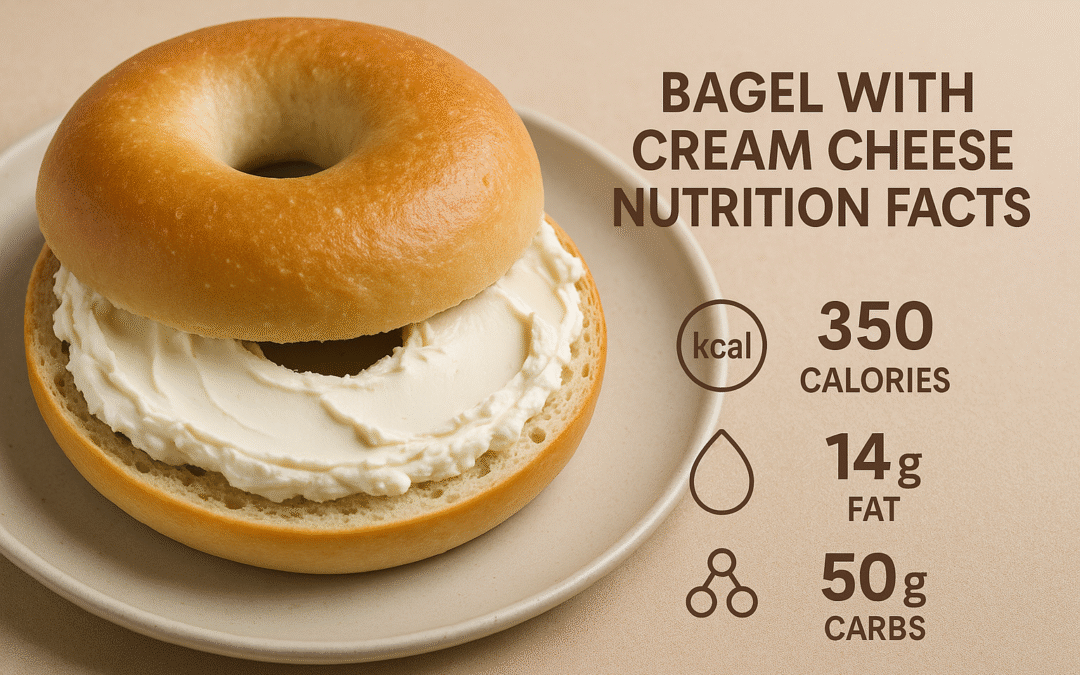
Bagel with Cream Cheese Nutrition Facts (Per Serving)
| Nutrient | Amount |
|---|---|
| Calories | 350–400 kcal |
| Total Fat | 14 g |
| Saturated Fat | 8 g |
| Cholesterol | 40 mg |
| Sodium | 530 mg |
| Total Carbohydrates | 50 g |
| Dietary Fiber | 2 g |
| Sugars | 5 g |
| Protein | 10 g |
| Calcium | 60 mg |
| Iron | 2.5 mg |
| Potassium | 130 mg |
Values based on a medium plain bagel (100 g) with 2 tablespoons (30 g) of regular cream cheese. Actual numbers vary by size, brand, and type.
Calories in a Bagel with Cream Cheese
A plain bagel with cream cheese typically contains 350–400 calories.
- The bagel alone: 250–300 calories
- Cream cheese topping: 90–120 calories
Heavier or flavored bagels (like everything or sesame) may contain up to 450 calories per serving, while using light cream cheese can reduce calories by about 40–50.
Though filling, it’s important to note that most of these calories come from carbohydrates and fat, with limited fiber or micronutrients.
Carbohydrates and Sugar
A single bagel provides around 45–55 grams of carbohydrates, mostly from refined white flour.
This offers quick energy but can cause rapid blood sugar spikes, especially when eaten alone.
To make it more balanced:
- Choose whole wheat or multigrain bagels for added fiber.
- Pair with protein sources like smoked salmon or eggs to reduce sugar response.
Sugars are minimal (around 5 g), mostly from natural flour components rather than added sugar — unless it’s a flavored bagel.
Protein Content
Bagels are not particularly high in protein, but when paired with cream cheese, you get around 10 grams per serving — enough to support moderate energy needs.
For extra protein:
- Choose Greek yogurt cream cheese or whipped versions.
- Add scrambled eggs, turkey slices, or smoked salmon for a more balanced breakfast.
A high-protein topping helps stabilize blood sugar and increases satiety.
Fat and Cholesterol
A bagel with regular cream cheese provides 14 grams of fat, including about 8 grams of saturated fat — mostly from the dairy component.
This can account for nearly 40% of the daily recommended saturated fat intake.
Light or whipped cream cheese reduces this significantly, offering:
- 5–7 g total fat
- 3–4 g saturated fat
- Fewer calories per tablespoon
If you’re watching your cholesterol, these lighter options or plant-based spreads are better alternatives.
Sodium Content
Each serving contains around 500–550 mg of sodium, mainly from both the bagel dough and cream cheese.
That’s roughly 25% of the daily recommended sodium intake, making it easy to exceed the limit when combined with other meals.
To reduce sodium:
- Choose plain or low-sodium bagels (avoid “everything” or “salted” toppings).
- Use unsalted cream cheese or substitute with avocado for healthy fats.
Fiber Content
A traditional white bagel offers only 1–2 grams of fiber, which is quite low for its carbohydrate load.
In contrast, a whole wheat or oat bagel provides 3–5 grams, improving digestion and helping with fullness.
Adding fiber-rich toppings like tomato, cucumber, or spinach can help balance the meal’s nutritional profile.
Vitamins and Minerals
| Nutrient | Function | Amount per Serving |
|---|---|---|
| Calcium | Bone health, muscle function | 60 mg |
| Iron | Oxygen transport | 2.5 mg |
| Potassium | Nerve and muscle support | 130 mg |
| Vitamin A | Eye and skin health | 150 IU |
| B Vitamins (B1, B2, B3, B12) | Energy metabolism | Trace amounts |
Fortified flour used in bagels adds small amounts of iron and B vitamins, but they don’t make the meal nutrient-dense. Cream cheese contributes some calcium and vitamin A, but not enough to meet daily needs.
Glycemic Index and Energy Impact
Bagels have a high glycemic index (70–85) due to refined flour, meaning they can raise blood sugar quickly.
The addition of cream cheese lowers the overall glycemic load slightly because fat slows digestion. Still, it’s best to pair your bagel with protein, fiber, or healthy fats to prevent an energy crash later.
Variations and Their Nutrition Comparison
| Type | Calories | Protein | Fat | Fiber | Sodium |
|---|---|---|---|---|---|
| Plain Bagel + Regular Cream Cheese | 380 | 10 g | 14 g | 2 g | 530 mg |
| Whole Wheat Bagel + Light Cream Cheese | 340 | 11 g | 8 g | 4 g | 480 mg |
| Everything Bagel + Regular Cream Cheese | 420 | 10 g | 15 g | 3 g | 600 mg |
| Mini Bagel + Regular Cream Cheese | 220 | 6 g | 7 g | 1 g | 300 mg |
| Vegan Cream Cheese + Whole Wheat Bagel | 360 | 9 g | 11 g | 4 g | 450 mg |
Whole wheat options generally provide more fiber and protein, while light or whipped cream cheese keeps calories lower.
Health Benefits
1. Quick Energy Source
The carbohydrates from bagels offer fast energy, ideal for active mornings or pre-workout fuel. The cream cheese adds fat that helps sustain energy levels.
2. Satiating and Comforting
A bagel with cream cheese is filling and emotionally satisfying, which can reduce the temptation for high-sugar snacks later in the day.
3. Good Source of B Vitamins
Enriched flour provides small but useful amounts of thiamine, niacin, and riboflavin, all crucial for converting food into energy.
4. Versatile Meal Option
The combination can be adapted for nearly any diet — vegan, high-protein, or low-sodium — depending on ingredient choices.
Potential Drawbacks
1. High in Refined Carbs
White bagels lack whole-grain nutrients and can cause sugar spikes followed by energy drops.
2. High in Saturated Fat
Regular cream cheese contributes significant saturated fat, which may impact cholesterol if consumed frequently.
3. Low in Fiber
Limited fiber means it doesn’t keep you full for long, especially compared to whole-grain breakfasts.
4. High Sodium Content
Frequent consumption can increase daily sodium intake, contributing to blood pressure concerns over time.
Healthier Alternatives and Tips
- Choose Whole-Grain Bagels: Adds fiber, magnesium, and longer-lasting fullness.
- Use Light or Whipped Cream Cheese: Cuts calories and fat by up to 50%.
- Add Protein: Include eggs, turkey, or smoked salmon for balance.
- Add Vegetables: Top with tomatoes, spinach, cucumber, or avocado for vitamins and crunch.
- Watch Portion Size: Opt for mini or half bagels when managing calorie intake.
With these adjustments, your favorite breakfast becomes both satisfying and more nutritionally balanced.
Homemade vs Store-Bought Nutrition
| Source | Calories | Fat | Sodium | Additives |
|---|---|---|---|---|
| Homemade Bagel + Cream Cheese | 320 | 10 g | 350 mg | None |
| Café Bagel (Large) | 450–500 | 18 g | 700 mg | Often added sugars |
| Store-Bought Packaged Bagel | 350 | 14 g | 500 mg | Preservatives possible |
Homemade versions are usually healthier since you control the salt, oil, and portion size.
How to Include Bagels with Cream Cheese in a Balanced Diet
- Eat occasionally, not daily — a few times a week fits most balanced diets.
- Combine with fresh fruit (like apple slices or berries) for fiber and antioxidants.
- Choose smaller bagels and spread cream cheese lightly, not thickly.
- Drink water or green tea instead of sugary beverages alongside.
By being mindful of portions and pairings, you can enjoy your bagel while keeping your nutrition goals intact.
Bagel with Cream Cheese vs Other Breakfast Options
| Breakfast | Calories | Protein | Fat | Fiber | Comments |
|---|---|---|---|---|---|
| Bagel + Cream Cheese | 380 | 10 g | 14 g | 2 g | High-carb, moderate protein |
| Oatmeal + Berries | 300 | 8 g | 5 g | 6 g | High fiber, steady energy |
| Greek Yogurt + Granola | 350 | 15 g | 10 g | 3 g | High protein |
| Egg Toast + Avocado | 320 | 12 g | 13 g | 4 g | Balanced macros |
The bagel ranks high in calories but low in fiber compared to alternatives — though still reasonable in moderation.
Quick Recap of Bagel with Cream Cheese Nutrition
| Nutrient | Amount per Serving |
|---|---|
| Calories | 380 kcal |
| Protein | 10 g |
| Fat | 14 g |
| Carbohydrates | 50 g |
| Sodium | 530 mg |
| Fiber | 2 g |
| Cholesterol | 40 mg |
| Calcium | 60 mg |
| Iron | 2.5 mg |
The Bottom Line
A bagel with cream cheese is satisfying, classic, and quick — but not the most nutrient-dense choice. It’s high in refined carbs, moderate in protein, and rich in saturated fat.
Still, when portioned well and paired with fiber and protein, it can fit into a balanced diet. Opt for whole-grain bagels, light cream cheese, and veggie toppings to turn this comfort food into a more wholesome breakfast.
As with most foods, the key lies in balance — not avoidance.